Choosing a bag · February 16, 2025
What Makes a Tour Bag Different?
← Journal2 min read
The biggest bag on the course is built for a caddie's shoulder and the TV cameras, not really for the weekend player.
Watch a professional tournament on television and you will notice that caddies carry bags far bigger than the ones most of us use. These are tour bags, also called staff bags, and they are built for one particular job: following a professional through four days of competition in whatever weather the week brings.
Big and Heavy, Because a Caddie Carries It
The tour bag is the largest bag on the course. It has a wide mouth and a tall, rigid body that stands up on its own, so even empty it weighs far more than a stand bag. Professionals never carry their own bags, which lets the makers put strength and capacity ahead of weight.
Room for a Whole Day of Competition
A tournament round can run from morning into the afternoon, so a tour bag has large pockets for a jacket, rain gear, balls, gloves and food. Most also add a valuables pocket, an umbrella holder and a towel ring, and they come with a rain hood that keeps the clubs dry when the weather turns mid-round.
A Billboard That Walks the Course
The body of a tour bag has large panels for the player's sponsors. The bag stands beside the golfer in a great many television shots, so for a sponsor it is a billboard that follows the player all week. That is part of the reason tour bags are so big.
Should an Amateur Use One?
On many courses in Vietnam the bag rides on a cart or on the caddie's trolley, so its weight matters less than it would on your own shoulder. A tour bag is still bulky in a car boot and at home, though. For most players, a cart bag that borrows the best ideas from tour bags is the more practical choice.
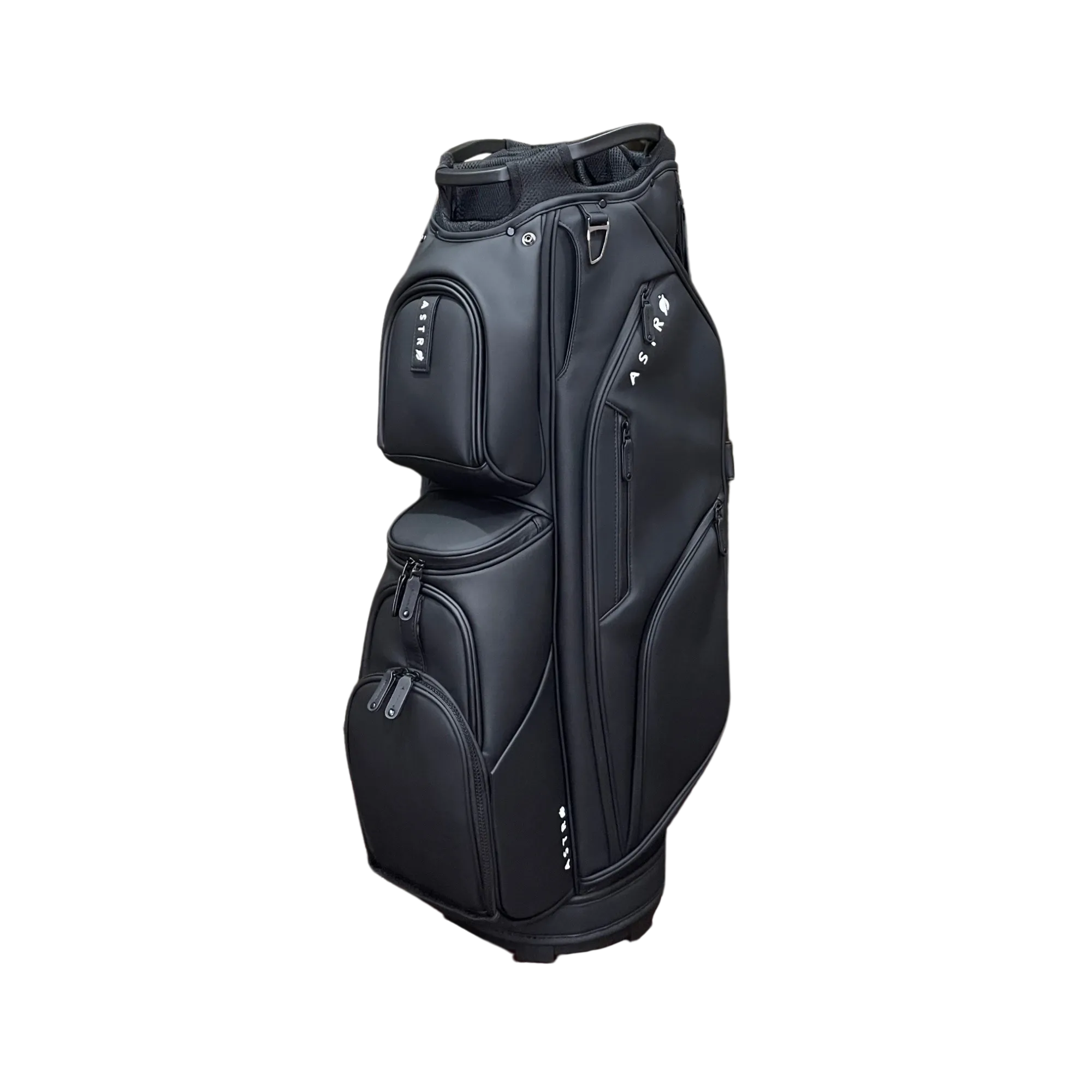
We made The Spaceship as that kind of cart bag. It borrows what is worth borrowing from a tour bag: fifteen full-length dividers, a rain hood and water-resistant synthetic leather, while the whole bag weighs only 3.5 kg.