Bag care · October 22, 2026
How to Care for Your Golf Clubs
← Journal5 min read
A few minutes with a towel after each round, a proper wash once a month and a dry place to keep them will see your clubs through many seasons.
For most golfers, the clubs are the most carefully chosen things in the bag. There is the driver that took several range sessions to settle on, and the putter so familiar that any other feels slightly wrong in your hands. Yet after a long round, few of us have the patience to wipe every club before zipping up the bag, and we have been guilty of that ourselves.
Fortunately, proper care needs no special kit. Most of the time, a towel, a little warm water and a few minutes after each round will do.
After Every Round
On most courses in Vietnam, your caddie wipes the clubface after each shot. What tends to get missed is a proper clean at the end of the round, when damp soil and grass are still lodged in the grooves of your irons and wedges. Those grooves put spin on the ball, especially on short shots around the green, so when they are packed with dirt the ball is harder to stop where you want it.
While the dirt is still soft, run the point of a wooden tee or a nylon brush along each groove, then wipe the head and shaft with a dry towel. Give the grips a wipe too, since the sweat from eighteen holes slowly makes them slick.
A Proper Wash Every Few Rounds
Every few rounds, or about once a month if you play regularly, wash the whole set. Fill a bucket with warm water (never hot) and a few drops of washing-up liquid, stand the irons and wedges in it for a few minutes, then scrub the faces and grooves with a soft brush. Keep the water below the ferrule, the small plastic collar where head meets shaft, because water seeping into the hosel can weaken the epoxy over time. Drivers, woods and putters should not be soaked. A damp cloth with a touch of soap is enough for them, and since painted heads scratch easily, keep stiff brushes and metal scourers well away.
Drying matters most. Towel off the head, the shaft and the joint between them, because a steel shaft packed away damp is quick to pick up spots of rust. While you are at it, give each club a gentle shake to check the head is not loose, look along the shaft for cracks, and take anything that seems wrong to a club repairer.
Keep Grips Clean, and Replace Them When They Slip
The grip is the only part of the club your hands touch, so it is the first part to wear. Sweat, sunscreen and dust build into a shiny film that makes it slippery. Each time you wash the set, wipe the grips with a cloth dipped in warm, mildly soapy water, go over them again with a clean damp cloth, and let them dry fully before you play.
We are always quick to blame a slick grip when a shot drifts offline, and now and then the excuse is true. When a grip has turned hard or shiny, has cracked under your thumb, or still feels slippery after a wash, it is time to replace it. If you play regularly, plan on new grips about once a year or every forty rounds or so; if you play less, they will last longer.
After Rain, and Through the Humid Months
Summer rain often arrives without warning, sometimes halfway through a round. A rain hood and headcovers keep most of the water out, but once you are home, take every club out of the bag, dry each one including the grip, and hang any wet headcovers up separately. Open all the zips and let the bag dry somewhere well ventilated before the clubs go back in, because wet clubs left overnight in a closed bag rust easily and the bag itself starts to smell musty.
In northern Vietnam, late winter and early spring bring nồm, a spell of humidity so heavy that walls sweat and tiled floors stay damp for days. It is the hardest season for keeping clubs in good condition, even if you never play in the rain. During those weeks, keep the bag in a room with a dehumidifier or air conditioning rather than under the stairs, tuck a few silica gel sachets into the pockets, and take the clubs out for a wipe now and then.
Storing Your Clubs and Travelling With Them
Plenty of golfers leave the bag in the car boot for convenience, especially when Saturday means a five o'clock alarm for an early tee time. But a car parked in the midday sun gets far hotter inside than out, and neither the epoxy holding the heads nor the rubber in the grips copes well with prolonged heat. Over time the bond weakens, and grips harden and crack sooner. At home, store the bag upright in a dry room, out of direct sunlight.
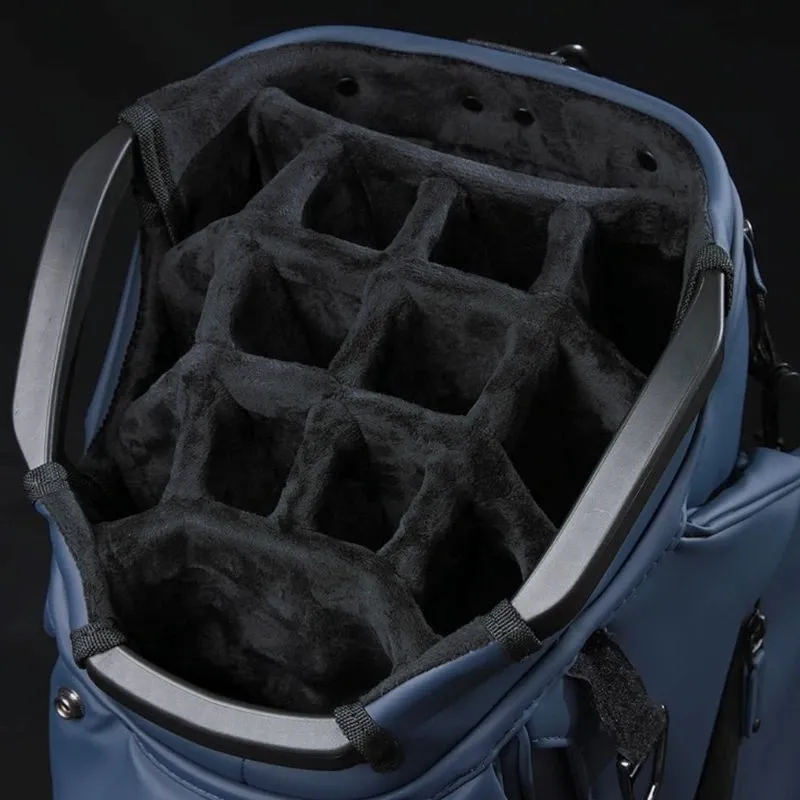
On a bumpy cart path, clubs that knock together pick up chips on the heads and scratches on the shafts. Headcovers on your driver, woods and putter prevent most of this. When we made The Spaceship, we gave it fourteen dividers running the full length of the bag for the same reason, so every club, jumbo grips included, has its own space and never rubs against its neighbour.
If you are flying, use a padded travel cover, wrap a towel around the heads of your woods, and if your driver has an adjustable hosel, take the head off and pack it separately.
None of this takes long, and once it becomes a habit, caring for your clubs is as routine as cleaning your shoes after a round, while the set keeps the familiar feel it had the day you brought it home.
If you are unsure how best to store or arrange your clubs, send us a message. We are always glad to talk it through with you.